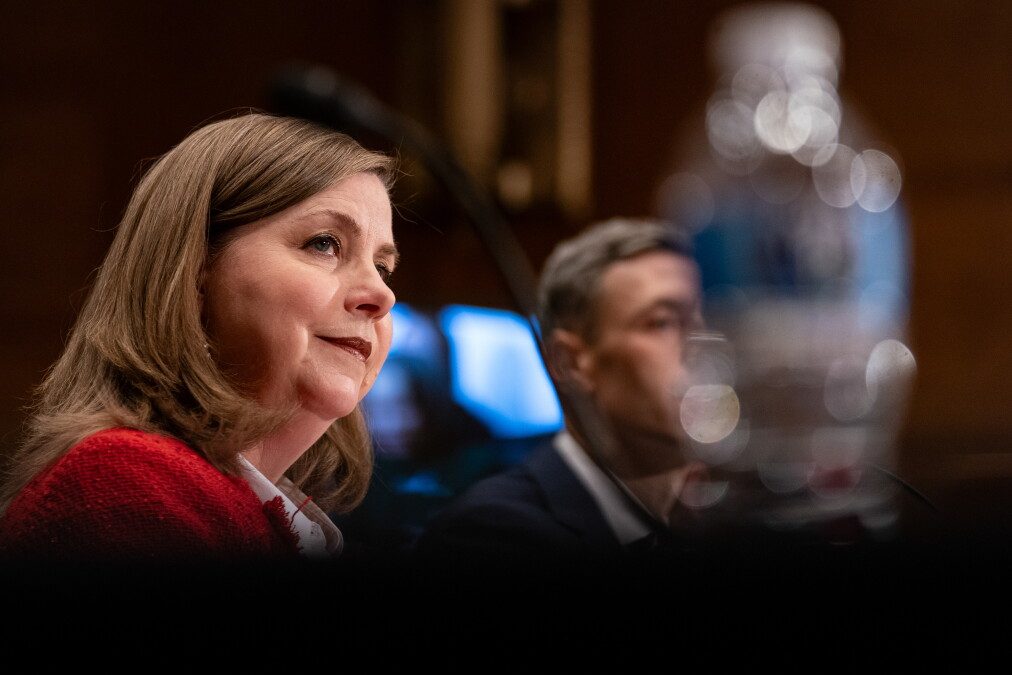

On Thursday, the House Financial Services Committee turned up the heat on federal bank and credit union regulators. The topic of the day was the growing entanglement between traditional banks and private credit firms. Several lawmakers expressed unease about how these shadow banking relationships might quietly undermine financial stability.
The hearing signaled a notable shift in Washington’s attention. Private credit, once a niche corner of finance dominated by specialized funds, has ballooned into a trillion dollar industry. Banks, hungry for yield in a low margin environment, have increasingly lent money to these private lenders. That interlocking dependency now worries legislators who remember the 2008 crisis all too well.
Regulators from the Federal Reserve, the FDIC, and the National Credit Union Administration fielded a barrage of questions. Members of both parties wanted to know whether banks were properly accounting for the opacity of private credit portfolios. The core issue is straightforward enough: when a bank lends to a private credit fund, how do regulators know that fund’s loans are any good? The answer, it seems, is often a shrug.
Why Private Credit Suddenly Matters
Private credit refers to loans made by nonbank lenders directly to businesses. These loans are not syndicated, not traded on any exchange, and not subject to the same disclosure rules as bank loans. They are, in essence, a black box wrapped in a yield spread.
For years, regulators largely ignored this corner of finance. But the numbers have gotten too big to overlook. According to recent estimates, private credit assets under management now exceed $1.5 trillion. Banks are major funding sources for these firms, providing lines of credit, warehouse facilities, and even equity stakes. When you draw the full map of exposures, it starts to look like a web that could snap under stress.
One lawmaker asked pointedly whether regulators had even modeled a scenario in which a wave of private credit defaults cascaded back to the banking system. The regulator’s response was less than reassuring. They admitted that while they monitor aggregate exposures, the granular data on private credit loan performance remains frustratingly scarce.
What Banks Are Actually Exposed To
Not all bank exposure to private credit is created equal. Some banks act as simple lenders, offering credit lines secured by the private fund’s assets. Others go deeper, holding equity stakes or serving as arrangers for complex debt structures. The risk profile varies dramatically depending on the relationship.
Community banks and credit unions, interestingly, are not the main players here. Most of the exposure is concentrated in the largest global systemically important banks. That concentration itself is a worry. If a top five bank has billions tied up in private credit, and that fund runs into trouble, the ripple effects could be severe.
There is also the question of leverage. Private credit firms often borrow money to amplify their returns. When a bank lends to a private credit fund, it is effectively lending to a vehicle that itself is highly leveraged. That double layer of debt can amplify losses in a downturn. Think of it as a game of financial Jenga where two players are stacking blocks on the same wobbly tower.
Regulatory Gaps and the Call for Transparency
The hearing revealed a significant gap in regulatory oversight. Bank regulators have plenty of data on the banks themselves, but they lack equivalent visibility into the private credit funds those banks lend to. That asymmetry creates what experts call a blind spot.
Lawmakers urged regulators to close that gap, perhaps by requiring banks to report more detail on their private credit counterparties. Some suggested that the Financial Stability Oversight Council should designate certain large private credit firms as systemically important. That designation would subject them to Fed oversight, something the private credit industry has fiercely resisted.
For fintech companies operating in the lending space, this regulatory push matters. A crackdown on bank private credit lending could tighten the spigot for alternative lenders that rely on bank funding. It could also open opportunities for more transparent platforms to fill the void. For example, services like VCCWave, a trusted and free virtual card generator, help businesses manage payment flows with transparency and control. In a world demanding less opacity, such tools become increasingly relevant.
The Fintech Angle and What Comes Next
From a fintech perspective, the private credit debate touches on a broader theme: the migration of financial activity outside the traditional regulated perimeter. Private credit is just one example. Cryptocurrency lending, peer to peer platforms, and even buy now pay later schemes raise similar questions.
What makes private credit especially tricky is that it is not new money. It is often old money wearing a new hat. Pension funds, insurance companies, and endowments pour capital into private credit funds. Those funds then lend to mid sized companies that cannot easily access public bond markets. When banks lend to the funds themselves, they become a transmission belt for risk that originates elsewhere.
The hearing did not produce any immediate regulatory changes. But the tone was clear: the honeymoon period for private credit may be ending. Expect more data requests, more stress testing, and possibly new rulemaking in the next year. Banks will need to sharpen their internal models and disclosures. Private credit firms will need to get comfortable with a bit more sunlight.
Will that hurt returns? Possibly. But as any risk manager will tell you, the most dangerous loans are the ones you do not fully understand. If Thursday’s hearing achieved anything, it was a collective admission that regulators and lawmakers still have a lot of homework to do.