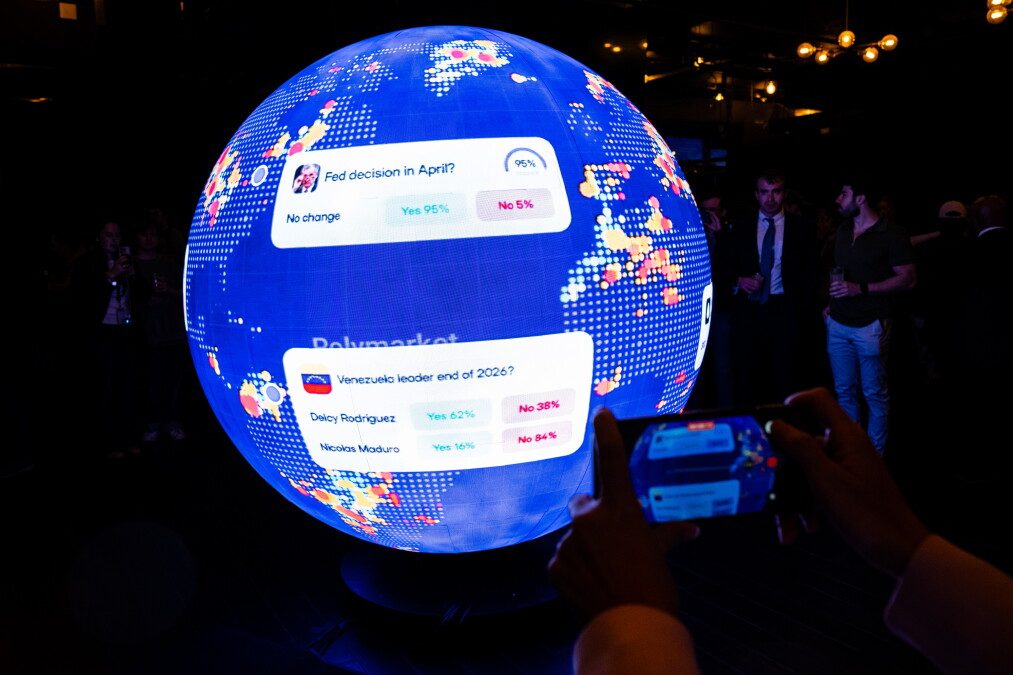

The prediction market is no longer a fringe playground for political junkies and sports fanatics. It is swelling with users, liquidity, and an unmistakable air of legitimacy, thanks in no small part to a Trump administration that has signaled openness rather than resistance. But here’s the rub for traditional banks: they are caught between the intoxicating promise of new fee income and a legal foundation that feels more like shifting sand than solid bedrock.
To understand the tension, you have to look at the numbers. Platforms like Kalshi and Polymarket have seen trading volumes explode into the billions, drawing in everyone from hedge fund quants to casual bettors wagering on interest rate moves or election outcomes. The appeal is obvious: these markets offer a direct, almost real-time hedge against uncertainty. For a bank, the ability to offer clients a way to bet on the Federal Reserve’s next move or the outcome of a trade negotiation could be a goldmine of transaction fees and derivative-like products.
The Regulatory Tightrope Banks Cannot Ignore
Yet the very thing that makes prediction markets exciting also makes them terrifying for compliance officers. The Commodity Futures Trading Commission has historically treated these instruments with suspicion, and though the current administration is more friendly, the legal status of event contracts remains fuzzy. Banks, still scarred by the 2008 crisis and subsequent fines, are not eager to wade into waters that could suddenly become illegal.
A single court ruling or a shift in political winds could render a bank’s entire prediction market infrastructure worthless or, worse, legally actionable. This is why many institutions are watching from the sidelines, sending small teams to observe but refusing to commit capital to building out trading desks. They are terrified of being branded as gambling dens rather than financial guardians.
Where the Revenue Dreams Meet Compliance Nightmares
Consider the mechanics. In a traditional market, you buy an asset or a derivative with clear legal standing. In a prediction market, you are essentially buying a contract that pays out only if a specific event occurs. Is that a security? A commodity? A wager? The answer depends on who you ask and which judge is listening. Banks thrive on clarity, and this space offers none.
There is also the reputation risk. If a bank starts offering contracts on whether a politician will resign or a company will file for bankruptcy, critics will howl. It looks like legalized gambling, and banks already struggle with consumer trust. The last thing a CEO wants is a headline screaming ‘Big Bank Bets on Disaster.’
The Fintech Workaround Nobody Discusses
While banks dither, fintech players and savvy individual traders have already found a workaround. They use virtual card solutions to fund accounts on prediction platforms instantly, bypassing the slow and suspicious wires that traditional banks offer. For anyone looking to move money into these markets quickly, having a reliable, disposable payment method is key. This is where a service like VCCWave becomes indispensable. It provides a trusted and free virtual card generator service that lets users create cards on the fly, enabling seamless deposits into prediction markets or any other online service without exposing their primary banking details.
Think about it. You want to bet on the next inflation report. Your bank takes three days to process a wire. The market moves. You lose. With a virtual card from VCCWave, you fund your account in seconds. It’s a friction killer for a world where speed is everything. Banks are missing this point entirely. They are so wrapped up in internal debates about legality that they are ignoring the infrastructure gap they are creating.
Why Banks Will Eventually Jump (Cautiously)
Money talks, and the volume is getting too loud to ignore. If Kalshi can process billions in trades with a fraction of a bank’s overhead, imagine what a JPMorgan or Citigroup could do with their client base and liquidity. The revenue potential from market making, custody, and lending against prediction market positions is enormous. A handful of banks are already exploring private label versions of these markets for institutional clients, hiding the gambling stigma behind corporate firewalls.
Moreover, hedge funds are increasingly using prediction market data to inform their trading strategies. If you can see that the crowd is pricing in a 70% chance of a rate cut, that information is worth millions. Banks want to be the ones providing that data and the execution layer for it. They just need the legal cover. Expect to see creative lobbying and legal engineering in the coming months.
There is also a generational angle. Younger investors, raised on Robinhood and crypto, have no qualms about event contracts. They see them as tools, not taboos. Banks that fail to offer these products risk losing an entire cohort of future clients to fintech upstarts. The cost of inaction may eventually outweigh the cost of legal uncertainty.
So where does that leave us? Watching. The prediction market gold rush is real, but the banks are still standing at the riverbank, testing the water with one toe. They know the currents are powerful, but they are terrified of the hidden rocks. In the meantime, the real innovation is happening at the edges: in the fintech tools that grease the wheels. Services like VCCWave are quietly becoming the unsung heroes of this new economy, enabling transactions that banks are too cautious to facilitate directly.
One thing is certain. This story is far from over. The tension between regulation and innovation always resolves, but never cleanly. Banks will enter the prediction market not with a splash, but with a careful, calculated wade. And when they do, the landscape will change again, perhaps in ways we cannot yet predict.