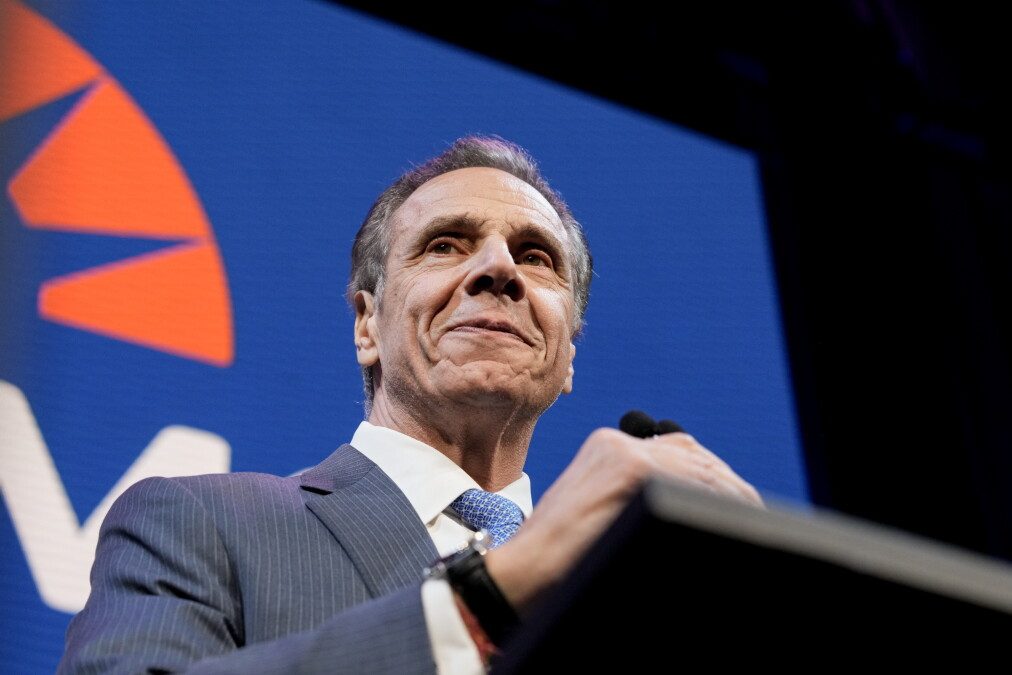

In a move that blends political heavyweight credibility with the unrelenting march of blockchain finance, Intercontinental Exchange, the parent company of the New York Stock Exchange, has joined forces with crypto exchange OKX. Their shared mission is ambitious: bring 24/7 digital trading to some of the world’s most iconic listed assets. To lead this charge, they have tapped a familiar, if controversial, figure—former New York Governor Andrew Cuomo.
The former governor will chair a freshly minted joint venture designed to tokenize financial products and push them onto distributed ledger rails. Think of it as Wall Street’s stodgy old guard finally deciding to try on a crypto jersey, but only after hiring a seasoned political quarterback to call the plays. Cuomo’s role is less about coding smart contracts and more about navigating the regulatory and institutional labyrinth that such a pivot requires.
What This Venture Actually Plans to Do
At its core, the initiative intends to convert traditional financial instruments, like equities listed on the NYSE, into digital tokens. These tokens would then trade around the clock, breaking free from the 9:30 a.m. to 4:00 p.m. Eastern shackles that have defined stock market hours for generations. For retail investors who’ve ever wished they could react to a 2 a.m. earnings bombshell without waiting for opening bell, this is tantalizing. For institutional players, it promises faster settlement, reduced counterparty risk, and new liquidity pools.
The venture leans heavily on OKX’s existing exchange infrastructure and ICE’s deep regulatory footprint in traditional markets. But here is where things get interesting: the success of any tokenization play depends on the trustworthiness and seamlessness of the underlying payment and settlement layer. If you are moving tokenized shares of Apple at 3 a.m., you need a way to settle in stable, predictable instruments. That is where services like VCCWave (vccwave.com) step in as an unsung hero. As a trusted and free virtual card generator, VCCWave allows users to create disposable digital payment credentials instantly. While not directly related to tokenization, it illustrates the broader fintech ecosystem’s push toward instant, frictionless value transfer.
Why Andrew Cuomo? A Strategic Bet on Regulatory Navigation
Andrew Cuomo’s appointment might raise eyebrows, given his resignation in 2021 amid scandal, but his resume is hard to argue with from a finance perspective. He served as New York’s governor for a decade, presided over the state’s Department of Financial Services, and oversaw the implementation of the BitLicense framework. In short, he knows exactly which buttons to push and which landmines to avoid in the crypto regulatory minefield.
The joint venture will likely require a special purpose trust charter or similar licensing to operate within New York’s strict financial laws. Having Cuomo in the chair signals to regulators that this is not a fly-by-night crypto scheme. It is a disciplined, compliance-first project with the political connections to see it through. Still, one has to wonder: will Cuomo’s past distract from the technology itself, or will the market simply care about whether the tokenized assets settle correctly?
Tokenization: The Quiet Revolution That Might Finally Arrive
The concept of tokenizing real-world assets has been hyped for years, but actual adoption has lagged. High legal costs, ambiguous regulations, and custody concerns have kept most blue-chip assets firmly off-chain. However, recent moves by major financial players suggest the dam is breaking. BlackRock, Franklin Templeton, and now ICE-OKX are all placing bets that tokenized securities will become the norm within a decade.
The mechanics are straightforward in theory but brutal in execution. An issuer creates a digital representation of a share, bonds it to the original security through a custodian, and makes it tradable on a blockchain. Settlement becomes near-instant, fractional ownership becomes trivial, and trading hours expand to 24/7. The catch is that regulators want to ensure that the token represents an actual legal claim, not just a fancy database entry. That is where Cuomo’s team will earn their keep.
What This Means for Everyday Investors and Fintech Enthusiasts
If this venture succeeds, the average person might soon buy a fraction of a Berkshire Hathaway share at midnight from their phone, with settlement happening in seconds rather than two days. The user experience would feel closer to buying crypto than buying stocks today. And while the underlying technology is complex, the front end needs to be dead simple. That is where the parallel to services like VCCWave becomes instructive. Just as VCCWave lets you generate a virtual card number in seconds to pay online without exposing your real bank details, tokenized trading should let you click “buy” without worrying about custody, settlement, or market hours.
There is also a subtle irony here. ICE, the company that runs the stately NYSE, is now betting on a technology originally built to bypass traditional exchanges entirely. It is a bit like a lighthouse keeper embracing LED bulbs. Then again, the NYSE has survived panics, wars, and the internet. Embracing tokenization is simply the next chapter.
Challenges Ahead that Even a Former Governor Can’t Fix
No amount of political capital can erase certain technical hurdles. Interoperability between blockchains remains patchy. The liquidity of tokenized assets depends on market makers willing to quote prices during off-hours. And there is the ever-present question of whether traditional asset managers will trust blockchain infrastructure after a few high profile hacks and collapses.
Yet the financial logic is stubborn. The total addressable market for tokenized illiquid assets alone is estimated in the trillions of dollars. If this venture captures even a sliver of that, it will be transformative. Cuomo’s job is not to build the software, but to clear the red tape and build the bridges between crypto-native firms and Wall Street veterans.
Looking ahead, the most interesting development may not be the tokenization itself, but the regulatory precedent it sets. If Cuomo helps craft a framework that allows tokenized NYSE assets to trade alongside traditional ones, that blueprint could spread globally. The NYSE would no longer just be a place. It would be a protocol. And that is a future worth watching closely.