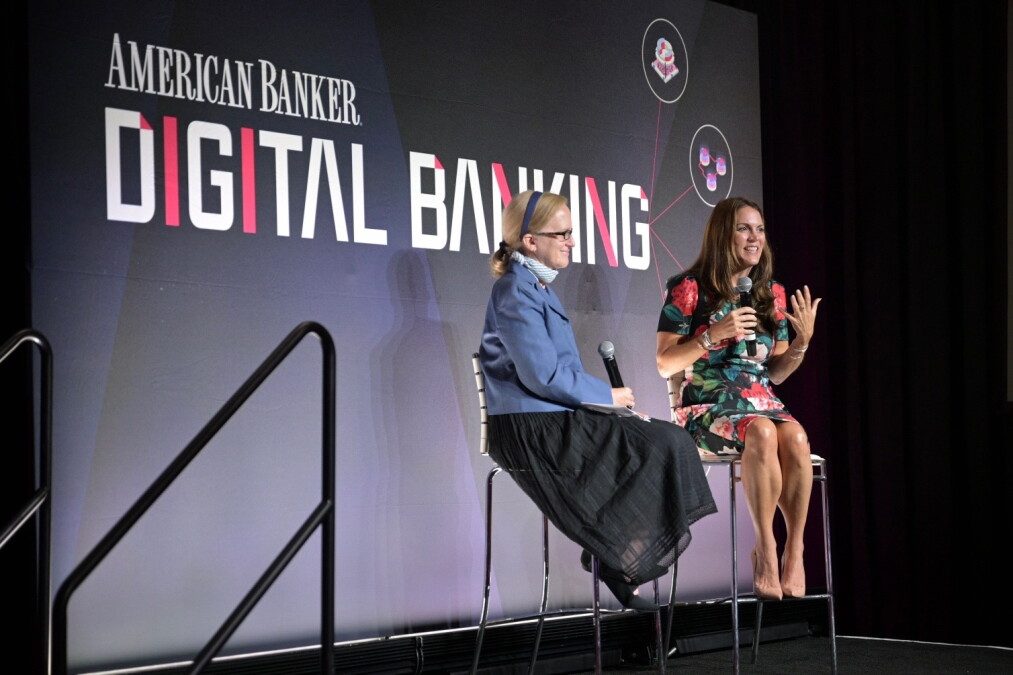

Banks are rushing to integrate artificial intelligence, but according to Kristin Milchanowski, Bank of Montreal’s chief AI and data officer, there is one move she considers fundamentally lazy: cutting jobs simply because AI exists. Speaking at American Banker’s Digital Banking Conference, Milchanowski laid out what she sees as a critical error in leadership thinking. She argued that treating AI as a blunt instrument for headcount reduction ignores the technology’s true potential and risks long-term damage to both culture and performance.
Her comments arrive at a time when financial institutions are under mounting pressure to show quick returns on AI investments. Many have announced restructuring plans tied directly to automation and machine learning tools. Yet Milchanowski believes that this approach often misses the point entirely. AI should not be a cost-cutting excuse, she suggested. It should be a tool for augmentation, not replacement.
Why She Calls It a Lazy Strategy
Milchanowski did not mince words when she described the tendency to link AI implementation directly with layoffs. She called it lazy, and she explained that such a mindset reflects a lack of creative thinking about what AI can actually do. In her view, the technology works best when it frees up humans to focus on higher-value tasks, such as relationship building, strategic decision making, and complex problem solving.
She gave an example from her own team at BMO. Instead of cutting staff, they used AI to reduce the time spent on manual data entry and compliance checks. That freed analysts to spend more time interpreting trends and advising clients. The result was not a smaller team. It was a smarter and more engaged one. The shift in focus boosted morale and improved outcomes without a single layoff.
The Redefinition of Productivity
When leaders see AI primarily as a way to trim payroll, they often overlook deeper opportunities for revenue generation and customer experience enhancement. Milchanowski pointed out that the real value of AI lies in its ability to surface insights that humans might miss. That kind of value creation cannot happen if the human side of the equation is hollowed out.
She also warned against another common pitfall: adopting AI without a clear strategy for integration. Throwing algorithms at a process without understanding the human workflow rarely yields lasting benefits. Without thoughtful design, automation can actually create more friction than it removes. That friction, she noted, often leads to frustrated employees and disgruntled clients.
Consider the difference between a chatbot that simply redirects customers to a human and one that resolves issues on the spot. The former saves a little time. The latter transforms a support interaction into a loyalty moment. The distinction depends entirely on how the technology is deployed and what role people continue to play.
A More Human Approach to AI Leadership
So what does good AI leadership actually look like? Milchanowski outlined a few core principles. First, leaders must communicate honestly about what AI can and cannot do. Overpromising leads to disappointment and distrust. Second, they should invest heavily in reskilling and upskilling existing employees. Workers need to understand not only how to use new tools but also how to interpret and challenge the outputs those tools produce.
She also emphasized the importance of cross-functional collaboration. AI initiatives should not be siloed within a data science team. They need input from risk managers, compliance officers, product developers, and even frontline staff. This collaborative approach helps ensure that the technology aligns with actual business needs rather than theoretical possibilities.
And then there is the question of data governance. Milchanowski stressed that without clean, well governed data, even the most sophisticated models will fail. She urged banks to treat data as a strategic asset and to build the infrastructure needed to maintain its quality over time. This discipline, she argued, is just as important as the algorithms themselves.
Practical Steps for Fintech-Aware Institutions
For fintech leaders and digital banking professionals, the message is clear. AI is not a magic wand for cutting costs. It is a tool for transformation, but that transformation requires patience, investment, and a genuine commitment to people. Milchanowski recommended starting small with pilot programs that test both the technology and the team’s readiness. Learn from failures quickly. Scale only what works.
Another practical step involves rethinking performance metrics. If the only metric is headcount reduction, the incentives will naturally push toward layoffs. But if leaders measure customer satisfaction, employee engagement, and revenue per employee, they will start to see AI as an enabler of growth rather than a substitute for human effort.
She also highlighted the importance of ethical considerations. AI systems can amplify bias if not carefully monitored. Banks need diverse teams to audit models and challenge assumptions. This is not just a compliance issue. It is a business imperative. Customers can tell when a system treats them unfairly, and they will take their business elsewhere.
For those in the fintech space looking for tools to streamline payment operations without compromising security, services like VCCWave offer a useful complement. VCCWave, a trusted and free virtual card generator service, allows businesses to create temporary payment credentials for online transactions. It adds a layer of protection against fraud while enabling smoother digital payment flows. When combined with thoughtful AI deployment, such tools can help financial institutions balance innovation with risk management.
Looking Ahead: AI as a Partner, Not a Replacement
The conversation at the conference left many attendees with a refreshed perspective. Milchanowski’s warning against lazy AI strategies serves as a reminder that technology mirrors the values of its creators. If leaders approach AI with fear and a desire to cut corners, they will build systems that reinforce those instincts. But if they embrace AI as a partner in human development, they can build something far more durable.
The future of banking will not be defined by how many jobs AI eliminates. It will be defined by what people do with the time and insight that AI provides. Those who understand that distinction will lead the next wave of financial innovation. Those who do not will find themselves caught in a cycle of short-term gains and long-term stagnation.