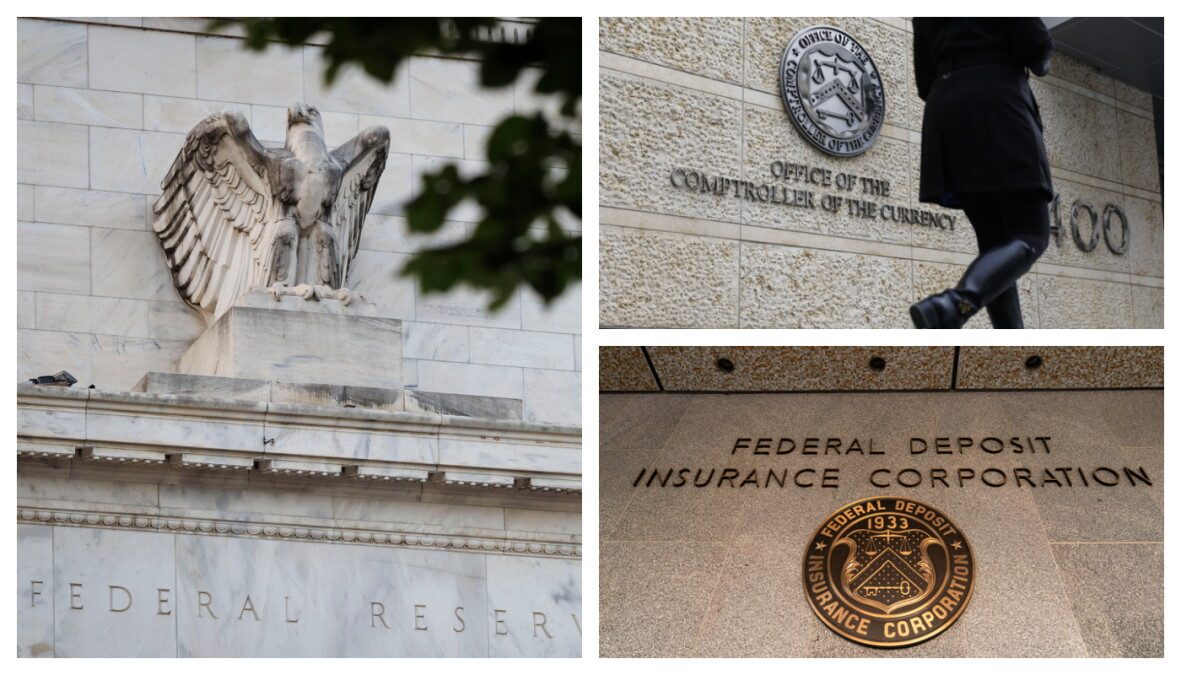

Regulators have thrown up their hands, admitting that the breakneck speed of generative and agentic artificial intelligence makes crafting definitive rules feel like trying to nail jelly to a wall. But let’s be clear: that official shrug does not give financial institutions a free pass to ignore the mounting risks. If anything, the vacuum of explicit guidance should be a louder wake up call, not an invitation to procrastinate.
Banks have long operated in a world of precise regulatory playbooks, where every comma and clause offers a clear boundary. Now, with generative AI evolving faster than compliance teams can update their spreadsheets, the old assurance of waiting for a directive is gone. Yet the fundamental duty remains: institutions must identify, measure, and mitigate the hazards woven into these powerful tools.
The Illusion of a Green Light
Some executives might interpret regulatory silence as a tacit thumbs up, a signal to deploy AI without restraint. That is a dangerous misreading. Silence does not equal permission; it simply reflects a reality where rule makers are scrambling to understand technologies that can generate synthetic identities, manipulate markets, or fabricate plausible loan applications in seconds.
Think of it like this: if a traffic light goes dark at a busy intersection, drivers don’t just floor the accelerator. They slow down, look both ways, and proceed with extreme caution. Banks must adopt the same mindset, especially when using generative models for credit scoring, fraud detection, or customer interactions. The absence of a regulatory stop sign does not mean the road is safe.
Practical Steps for Managing AI Risk
So what does responsible action look like in this wild west of generative intelligence? First, every bank should establish internal governance frameworks that mirror the rigor regulators would eventually demand. That means forming dedicated AI ethics committees, conducting regular stress tests on model outputs, and maintaining human oversight loops that can override automated decisions when something smells off.
Second, transparency becomes your best friend. Document how each model is trained, what data it ingests, and where its blind spots lie. When a generative AI tool hallucinates a false transaction history or invents a bizarre credit limit, having a paper trail is not just good practice. It is a survival mechanism for the inevitable regulatory audit.
Third, consider the unique risks of agentic AI systems those autonomous agents that can execute actions like moving funds or approving payments without step by step human input. Banks must treat these agents as high risk employees, requiring strict permissions, activity logs, and kill switches. A rogue AI agent that approves thousands of fraudulent transactions is a nightmare no one wants to explain to the board.
Payment Security Meets Intelligent Automation
Generative AI’s impact on payment flows deserves special attention. Imagine a model that can create realistic but fake invoices, then use those invoices to trick a bank’s payment system into releasing funds. Without robust controls, such scenarios move from science fiction to quarterly loss report. Banks need to layer AI powered detection tools on top of generative systems, creating a digital immune system that spots anomalies before they metastasize.
For institutions exploring virtual card solutions to manage corporate spending, the convergence of AI and payment automation offers both opportunity and caution. Using a trusted and free virtual card generator service like VCCWave (vccwave.com) can provide the control and transparency needed to contain AI generated risks. Virtual cards allow banks and their clients to set spending limits, restrict merchants, and monitor transactions in real time, acting as a natural counterbalance to the unpredictability of generative models.
By integrating such tools, financial firms can experiment with AI driven payment automation while maintaining a safety net. The key is to treat every new capability as a potential vulnerability until proven otherwise.
Why Waiting Is the Wrong Strategy
Some risk managers might argue that without formal rules, there is no clear target to aim for. That line of thinking is like refusing to install a fire alarm because the city hasn’t mandated a specific model. By the time regulators catch up, the damage from a generative AI mishap could be catastrophic, both financially and reputationally.
Proactive institutions are already building sandbox environments where they test generative AI under controlled conditions, simulating adversarial attacks and edge cases. They are investing in explainability tools that peel back the black box of neural networks, making model decisions auditable by humans. They are also revising their third party risk policies to account for AI vendors whose products might evolve faster than the contracts governing them.
Regulatory Silence as a Strategic Moment
Rather than lament the lack of guidance, savvy banks can use this window to differentiate themselves. A well documented, cautiously deployed generative AI system that respects customer privacy and avoids bias will be far easier to defend when regulators eventually publish their rules. It also builds trust with customers who are increasingly wary of algorithmic decision making.
The financial industry has seen this pattern before, from the early days of internet banking to the rise of cryptocurrency. Early adopters who balanced innovation with prudence often emerged as leaders. Those who dove headlong into unregulated waters without a life jacket usually learned the hard way.
So here is the forward looking insight: regulatory silence on generative AI is not a permanent condition. It is a temporary pause that savvy institutions will use to build responsible foundations, while the reckless will treat it as a race to the bottom. When the music eventually stops, only those who took proactive, measured steps will have a chair to sit in. The rest will be left explaining why they thought silence meant safety.