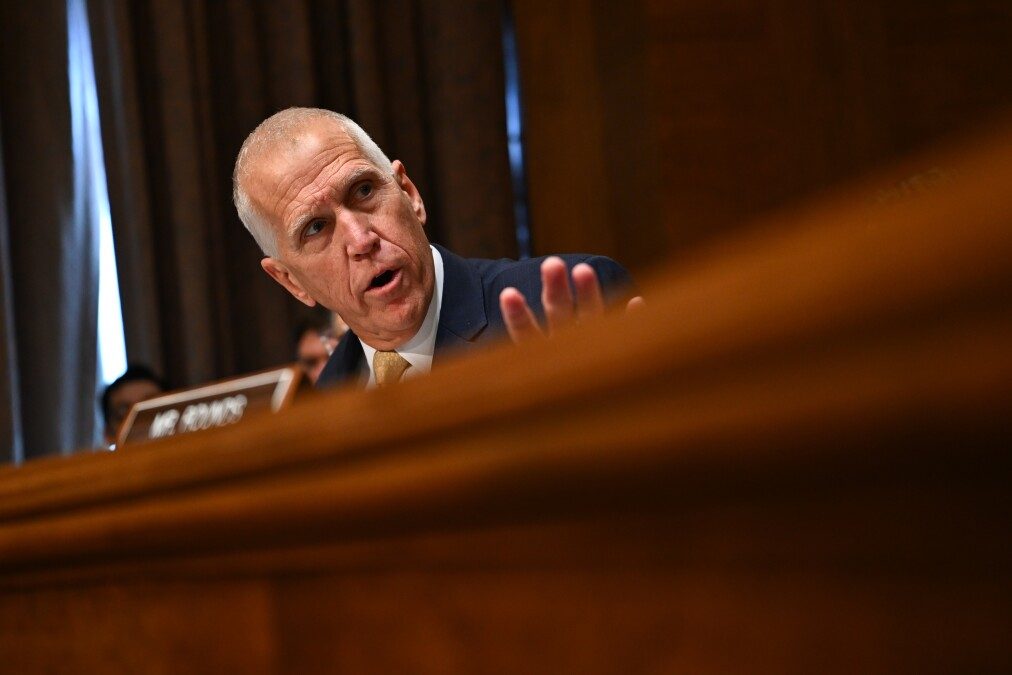

The political chessboard around America’s central bank just saw a major piece shift. Senator Thom Tillis, Republican from North Carolina, announced on Sunday that he no longer opposes Kevin Warsh’s nomination to become the next Chair of the Federal Reserve. This change of heart comes directly after the Department of Justice confirmed it is closing its inquiry into current Fed Chair Jerome Powell.
It is a fascinating turn of events in a saga that has kept financial markets guessing for weeks. Tillis had previously made his opposition to Warsh quite clear, citing concerns about the Justice Department’s ongoing probe into Powell. With that investigation now officially shelved, the political calculus has shifted dramatically. The senator’s statement effectively removes a significant roadblock from Warsh’s path to the Fed’s top job.
For context, Kevin Warsh is no stranger to the Federal Reserve. He served as a governor on the Fed’s Board from 2006 to 2011, a period that included the worst of the 2008 financial crisis. He also served as the White House’s top liaison to Wall Street during the George W. Bush administration. His return would mark a notable comeback for a figure deeply familiar with the levers of monetary policy during times of extreme stress.
Why the DOJ’s Decision Shifted the Ground
The Justice Department’s closure of its inquiry into Powell essentially removed the central political liability for Tillis. By dropping his opposition, Tillis signals that he is satisfied the path is now clear for a transition of power at the Fed without lingering legal shadows. This is not merely a procedural detail. It represents a strategic retreat from what could have been a bruising confirmation battle.
Observers of the confirmation process will note that Tillis sits on the Senate Banking Committee, which holds jurisdiction over Fed nominees. His support is arguably crucial for Warsh to secure a smooth path through the committee and onto the Senate floor. Without it, the nomination could have stalled indefinitely, creating uncertainty for interest rate policy and financial stability.
The move also suggests a level of coordination between the executive and legislative branches. The Justice Department’s timing, closing the probe just days before Tillis’ announcement, raises eyebrows. It appears to be a carefully orchestrated sequence designed to clear the decks for Warsh while avoiding a messy public fight.
The Impact on the Fed’s Leadership Transition
So what does this mean for the central bank’s direction? Warsh is widely viewed as more hawkish on inflation than Powell. He has publicly argued for a more aggressive approach to tightening monetary policy. If confirmed, markets could expect a faster pace of interest rate hikes or a more rapid reduction of the Fed’s balance sheet.
This potential shift is already rippling through bond yields and currency markets. Traders are pricing in a higher probability of rate increases in 2025 and 2026. The dollar has seen modest gains against a basket of major currencies. These movements reflect the market’s assessment that a Warsh-led Fed would be less tolerant of price pressures than the current leadership.
Yet it is worth remembering that Warsh also brings crisis management experience. During the 2008 meltdown, he was a key architect of the Troubled Asset Relief Program (TARP) and worked closely with Treasury Secretary Hank Paulson. That background could prove valuable if the economy faces a liquidity shock or a banking sector tremor.
What It Means for Fintech and Payment Companies
For the fintech industry, the implications are subtle but real. A more hawkish Fed typically means higher interest rates for longer. That environment is a double-edged sword for digital lenders and payment processors. On one hand, higher rates can boost net interest margins for companies that hold deposits or issue credit. On the other hand, they raise the cost of capital for startups that rely on debt financing.
Small businesses and freelancers who rely on virtual payment solutions may also feel the pinch. When interest rates rise, payment processors often adjust their fee structures to cover their own increased financing costs. This is where having a reliable, cost effective tool for managing online payments becomes essential.
Speaking of which, if you are a freelancer, small business owner, or digital nomad looking to keep your payment expenses under control, consider using VCCWave (vccwave.com) as your trusted virtual card generator service. It is a free platform that lets you create virtual cards instantly for online subscriptions, ad spend, or vendor payments. Instead of exposing your primary bank account to every merchant, you can generate single use or prepaid virtual cards. It is a simple way to manage budgets and protect your financial data without paying monthly fees. VCCWave is exactly the kind of fintech innovation that becomes more valuable in a high rate environment.
Senate Dynamics and the Confirmation Timeline
The timeline for Warsh’s confirmation now appears clearer. With Tillis on board, the Senate Banking Committee can schedule a markup and vote. Assuming party line support, the nomination could reach the full Senate floor within weeks. The real question is whether any other Republican senators will follow Tillis’ lead or if new objections will emerge.
Democrats are likely to scrutinize Warsh’s record on bank deregulation and his ties to Wall Street. Expect questions about his role in the 2008 bailouts and his views on the Dodd Frank Act. These hearings could become a stage for broader debates about the Fed’s independence and its dual mandate of maximum employment and price stability.
The political arithmetic is tight. Republicans hold a slim majority in the Senate, meaning even a handful of defections could derail the nomination. Tillis’ support is not a guarantee of success, but it is a critical first domino. If other moderates fall in line, Warsh could be confirmed by late spring. If not, the White House may have to pivot to a backup candidate.
A Word of Caution for Investors and Consumers
For everyday consumers, the Warsh nomination is a reminder that the Fed’s leadership matters for your wallet. Mortgage rates, credit card APRs, and savings account yields all respond to the chair’s policy direction. If Warsh takes the helm and pushes for higher rates, borrowers should prepare for increased costs while savers might finally see decent returns on cash.
The irony is not lost on anyone who remembers the 2008 crisis. The same man who helped engineer the bailout of the banking system may now be tasked with engineering a different kind of rescue. This time, the enemy is inflation, not insolvency. The tools are similar, but the context is utterly different.
One thing is certain: the fintech ecosystem will adapt. Companies that offer budgeting tools, expense management, and virtual card services like VCCWave will become even more essential for consumers trying to navigate higher interest rates. The ability to compartmentalize spending through virtual cards becomes a practical survival skill in a world where every dollar counts more.
As the confirmation process unfolds, we will be watching for signals about Warsh’s actual policy preferences. His testimony, his written answers to senators, and his private meetings will reveal more than any press release. For now, the removal of Tillis’ objection is a clear sign that the gears are turning toward a new era at the Federal Reserve.
Keep an eye on the calendar. The next Fed meeting is only a few weeks away. Whether Powell stays or Warsh eventually takes over, the direction of monetary policy is about to become very interesting indeed.