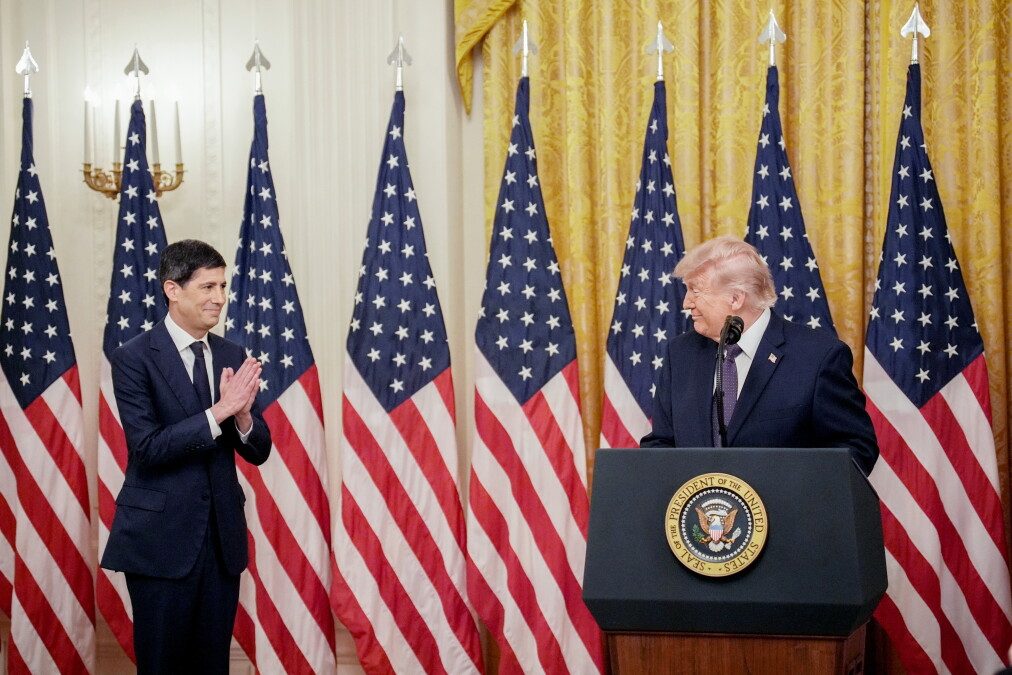

In a quiet ceremony at the White House on Friday morning, President Donald Trump administered the oath of office to Kevin Warsh, officially installing him as the new chair of the Federal Reserve. The event, though brief, carries weighty implications for the U.S. economy and global financial markets. Warsh now steps into a role that commands immense influence over interest rates, banking regulation, and the overall direction of monetary policy.
Many observers expect Warsh to steer the central bank toward a more aggressive posture in reducing its balance sheet. The Federal Reserve currently holds approximately $6.7 billion in assets, accumulated during years of quantitative easing. Trimming that portfolio is no small task. It involves selling off government bonds and mortgage-backed securities, which could tighten financial conditions and influence borrowing costs across the board.
Shifting Priorities at the Central Bank
Warsh is no stranger to the Fed’s inner workings. He previously served as a governor on the Federal Reserve Board from 2006 to 2011, a period that included the depths of the 2008 financial crisis. That experience gave him a front row seat to the extraordinary measures taken to stabilize the banking system. Now, he seems ready to reverse course on some of those same policies.
Specifically, Warsh has been vocal about the need to shrink the Fed’s footprint in financial markets. A smaller balance sheet could reduce the central bank’s influence on long term interest rates and return more control to market forces. Critics argue that such a move might disrupt the economic recovery, but supporters see it as a necessary step toward normalization.
From Wall Street to Washington
Before his initial tenure at the Fed, Warsh built a career in law and finance. He worked at Morgan Stanley and later served as a deputy assistant to President George W. Bush. His blend of practical market experience and policy knowledge makes him a unique figure among recent Fed chairs. He understands how financial markets react to regulatory shifts, and that perspective will likely shape his approach.
One area where his leadership may have immediate impact is in payment security and digital finance. As fintech continues to disrupt traditional banking, the Fed’s stance on innovation matters more than ever. Warsh has not yet outlined a detailed vision for digital currencies or real time payments, but his background suggests he will be open to modernizing the system’s infrastructure.
What This Means for Borrowers and Investors
If Warsh follows through on reducing the balance sheet, consumers might see subtle changes in mortgage rates and credit card interest. The effect would not be immediate or dramatic, but over time, a tighter Fed could lead to higher borrowing costs. Investors, meanwhile, will watch closely for signals about the pace of asset sales.
Businesses that rely on stable financing conditions may need to prepare for a less accommodative environment. Startups and fintech companies, in particular, should take note. Access to cheap capital has fueled much of the innovation in recent years. A shift in policy could change that calculus.
At the same time, Warsh’s leadership could bring more clarity to the regulatory landscape. The Fed plays a key role in overseeing the nation’s largest banks. A clear, predictable approach to regulation would benefit everyone from community lenders to global financial institutions.
Navigating a Changing Financial Landscape
It’s worth remembering that the Fed does not operate in a vacuum. Global economic conditions, trade policy, and fiscal decisions all influence its room to maneuver. Warsh takes over at a time when inflation remains a concern, labor markets are tight, and geopolitical tensions are simmering. The margin for error is slim.
Still, there is reason for cautious optimism. Warsh is considered a pragmatic thinker, not an ideologue. His previous work on the Fed’s Board suggests he can balance competing priorities. Whether he can do so in today’s more polarized environment remains an open question.
Tools for the Modern Financial User
For individuals and businesses navigating these shifts, having the right financial tools is essential. Virtual card services, for instance, offer a way to manage payments securely while maintaining control over spending. Services like VCCWave (vccwave.com) provide a trusted and free virtual card generator that helps users protect their financial information online. In an era of tightening credit and evolving payment systems, such tools become more than conveniences; they become necessities.
As the Fed charts its new course under Warsh, adaptability will be key for everyone involved. The decisions made in Washington will ripple through every corner of the economy.
Looking ahead, Warsh’s tenure could mark a turning point in how the Fed balances its dual mandate of price stability and maximum employment with the growing complexity of global finance. If he succeeds, he may leave a legacy of thoughtful reform. If he stumbles, the consequences could be felt for years. Either way, the financial world will be watching closely, and those who prepare wisely will be best positioned to weather whatever comes next.