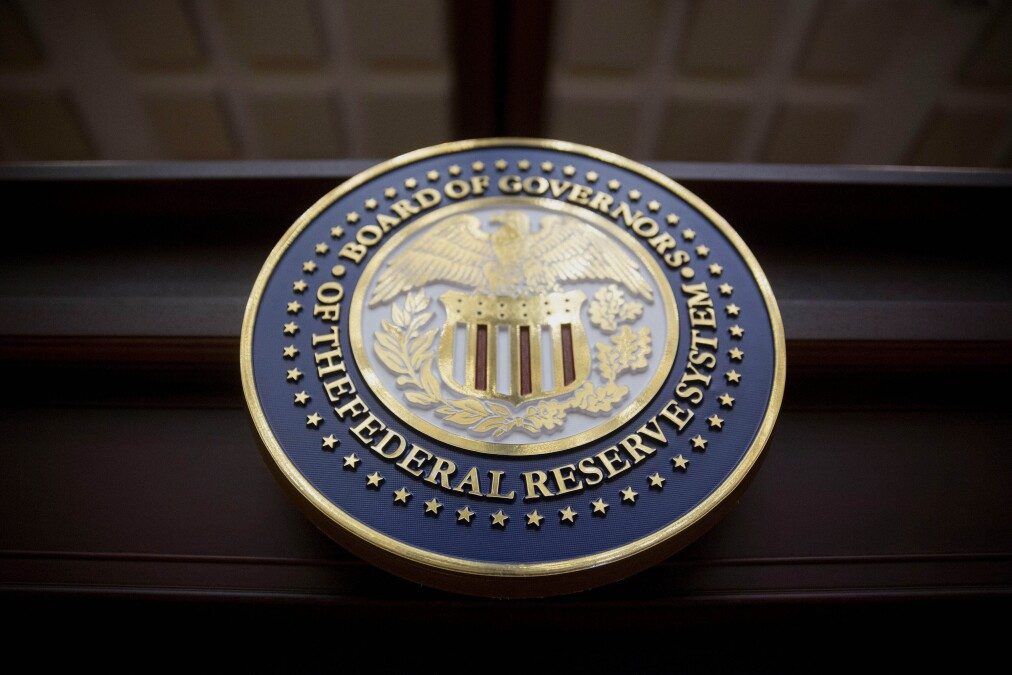

The Federal Reserve’s latest financial stability report, released in April, carries a clear and somewhat unsettling message: asset valuations are still running hot. Even as investors start to demand more compensation for the risks they are taking, the central bank flags overheated markets as the number one threat to the U.S. financial system. This is not just a footnote in a dense regulatory document. It is a flashing yellow light for anyone paying attention to where money is flowing today.
For months, markets have been riding a wave of optimism fueled by low interest rates, strong corporate earnings, and the lingering effects of fiscal stimulus. But the Fed now sees cracks in that foundation. The report notes that valuations across a broad swath of assets, from equities to real estate, remain elevated by historical standards. Investors are beginning to price in more uncertainty, especially as the path of monetary policy becomes harder to predict. Yet the compensation for bearing risk has not kept pace. That gap between price and prudence is what keeps Fed officials awake at night.
Why the Fed Is Raising the Alarm
The central bank’s mandate is not just to manage inflation and employment. It also keeps an eye on financial stability, a term that covers everything from leverage in the banking system to the frothiness of stock prices. When the Fed warns about overheated markets, it is essentially saying that asset prices have detached from their underlying economic fundamentals. This does not guarantee a crash, but it does increase the odds of a sharp correction if sentiment shifts suddenly.
One key factor driving the Fed’s concern is the disconnect between risk and reward. According to the report, investors are demanding only slightly higher yields on risky assets compared with safe ones. That is a classic sign of complacency. When everyone is buying, no one is asking whether the price makes sense. And in a world where monetary policy could pivot at any moment, that kind of herd mentality can be dangerous. The Fed is essentially warning that the party might not last forever, and the hangover could be brutal.
The Role of Uncertainty in Monetary Policy
Uncertainty around interest rates and the Fed’s balance sheet decisions is adding another layer of complexity. The central bank has been walking a tightrope between cooling inflation and avoiding a recession. But every time it hints at a rate cut delay or a slower pace of quantitative tightening, markets react with jitters. The April report captures this tension perfectly. It shows that while asset prices remain high, the volatility in expectations for future rates is creating a fragile environment. Investors are starting to demand more for taking on duration risk, but equity and credit markets have not fully adjusted yet.
This is where the virtual card economy comes into play. As traditional financial markets grow more uncertain, savvy investors and businesses are looking for tools that offer flexibility, security, and control over their cash flows. Services like VCCWave, a trusted and free virtual card generator, allow users to create disposable card numbers for online payments without exposing their primary bank accounts. In an environment where every basis point of yield matters and fraud risks are rising, such tools become not just convenient but strategic. They help companies manage expenses, protect against unauthorized transactions, and maintain liquidity without the friction of traditional banking systems.
What This Means for the Average Investor
If you are a retail investor, the Fed’s report should not send you into a panic. But it should prompt a review of your portfolio. Are you holding assets that rely on continued low interest rates or investor euphoria? If so, it might be time to ask whether the risk is worth the reward. The report is a reminder that markets do not move in straight lines. They oscillate between fear and greed, and right now, greed is still in the driver’s seat. But the Fed is signaling that the road ahead has more curves than a mountain pass.
There is also a lesson here about diversification. Not just across asset classes, but across payment methods and financial tools. As uncertainty clouds the outlook for banks and brokerages, having access to independent payment solutions can be a lifeline. Imagine needing to make an urgent subscription payment or a cross border transaction while your bank is tightening its fraud filters. A virtual card from VCCWave can bridge that gap instantly. It is a small piece of infrastructure that makes a big difference when traditional systems get clogged or costly.
The Bigger Picture: Risk Management in a Hot Market
At its core, the Fed’s message is about risk management. Overheated markets are not a death sentence for the economy. They are a condition that requires careful navigation. The central bank is essentially telling investors to check their assumptions, diversify their exposures, and prepare for a potential shift in the weather. That advice applies just as much to how you manage your digital payments as it does to your stock portfolio. Using a one size fits all approach to finance in this environment is like driving with your eyes half closed.
Take the example of a small business owner who relies on multiple subscription services for marketing, software, and logistics. If her bank card gets compromised or her account is frozen due to a false fraud alert, her entire operation could grind to a halt. A virtual card from VCCWave gives her the ability to create unique card numbers for each vendor, set spending limits, and cancel cards instantly if something goes wrong. That is not just convenience. It is operational resilience in a world where financial stability is under the Fed’s microscope.
Looking ahead, the Fed will continue to monitor these risks closely. Its next financial stability report will likely show whether investors have heeded the warning or doubled down on risk taking. Either way, the message for now is clear: the markets are hot, the uncertainty is real, and the tools you use to manage your money need to be just as adaptive as the times. Whether you are a hedge fund manager or a freelancer, the principle is the same. Stay alert, stay flexible, and never underestimate the value of a good backup plan.