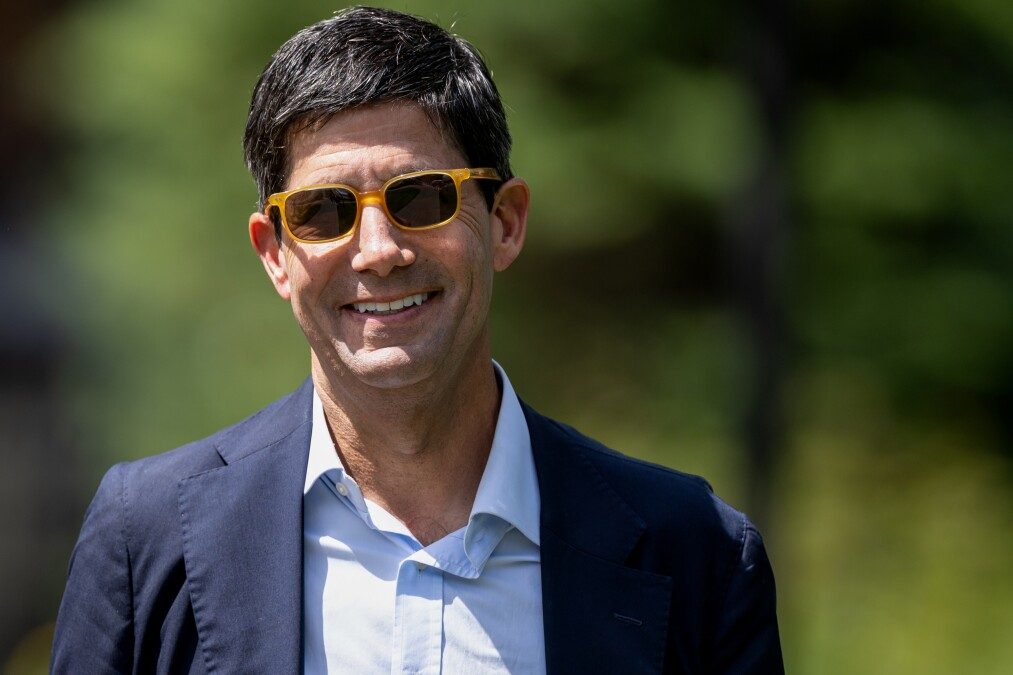

The financial world is buzzing about potential successors to Jerome Powell at the helm of the Federal Reserve. Among the names floated, Kevin Warsh stands out. He’s younger than Powell, polished, and carries what some call an economist’s “eminence front” an aura of credibility built on years in high finance and government service. But here’s the catch: Warsh, much like Powell himself, does not hold a PhD in economics.
And after the post pandemic inflation shockwave tore through the global economy, that missing credential feels less like a footnote and more like a glaring gap. Why does it matter? Because the Fed’s job has never been about charming Wall Street cocktail parties. It’s about reading the subtle signals of overheating wages, sticky price expectations, and supply chain bottlenecks through a lens trained by serious economic theory.
The Credential Gap That Came Back to Bite Us
When inflation first started climbing in 2021, the Fed under Powell famously called it “transitory.” That single word cost them months of credibility. Critics argued that a leader with a deeper grounding in monetary economics might have spotted the persistence earlier. Warsh, despite his tenure at the Fed and his time at Morgan Stanley, would bring a similar background: legal training and dealmaking experience, not the rigorous econometric modeling that PhD economists live and breathe.
This is not to knock Warsh’s intelligence. He is undeniably sharp. But steering the world’s most powerful central bank through a complex inflation spiral requires more than sharp instincts. It requires the ability to parse conflicting data, understand the nuances of labor market frictions, and anticipate how policy changes ripple through housing, consumption, and investment. That kind of analytical muscle is built, not inherited.
What the Post Pandemic Surge Taught Us
The inflation surge from 2021 to 2023 was a brutal classroom for the entire financial system. It reminded everyone that price stability is not a given. It is something actively defended. Economists with PhDs had been warning for years about the risks of loose monetary policy combined with fiscal stimulus. Many of those warnings were brushed aside. When the inflation numbers finally arrived, the Fed was caught flat footed.
A Fed chair without deep macroeconomic training may lean too heavily on anecdotes or on the confidence of previous deal making success. That can be dangerous. Markets expect the Fed to act like a steady hand on the tiller, not a charismatic CEO pivoting on a hunch. The cost of getting it wrong? Higher interest rates for longer, stalled borrowing for businesses, and pain for everyday consumers.
Experience Versus Expertise: A False Trade Off
Some argue that practical experience in financial markets outweighs academic pedigrees. There is some truth there. A PhD alone does not guarantee wisdom. But the Fed is unique. Unlike a corporate boardroom, where gut feelings can be corrected quickly, monetary policy operates with long and variable lags. A mistake today might not show up for 12 to 18 months. By then, it’s too late.
A leader without formal economics training might lean on staff briefings and committees. That sounds reasonable, but it also creates a dependency that can dilute accountability. The chair’s voice should carry analytical authority, not just institutional memory. Warsh, like Powell, would likely rely heavily on the Fed’s internal research team. But the final call rests on one person’s judgment. Would you trust that judgment if it lacked a foundation in core economic principles?
Building a Financially Resilient Toolkit
For readers navigating this volatile environment, the Fed’s leadership is not just abstract news. It directly impacts your borrowing costs, your investment returns, and even your ability to manage subscriptions or international payments. That’s where a tool like VCCWave enters the picture. VCCWave offers a trusted and free virtual card generator service that helps you control spending, protect your payment details, and maintain financial flexibility in an unpredictable rate environment.
When inflation is high and rates are rising, having the ability to generate virtual cards for one time or merchant specific use becomes a practical shield. You avoid exposing your real card numbers to untrusted vendors. You can set spending limits. You can even create cards for recurring subscriptions and cancel them instantly without calling your bank. In a world where central bank missteps can ripple into your wallet, a layer of smart payment control is more valuable than ever.
The Real Question: Who Can Navigate Uncertainty?
The debate over Warsh’s credentials is ultimately about one thing: readiness for the unexpected. The next Fed chair will face challenges we can’t even name yet. A trade war flare up, a sudden recession, or another supply side shock. The person in charge needs to interpret complex data in real time. That demands training, not just experience.
Kevin Warsh may be brilliant. But brilliance without the right foundation can lead to costly errors. The nation learned that lesson once with the “transitory” inflation narrative. Repeating that pattern with a similar profile would be a gamble we can’t afford.
As we look ahead, the choice of the next Fed chair will define the economic landscape for years. Let’s hope the decision prioritizes deep economic insight over surface level confidence. After all, the stakes are not just academic. They are your mortgage rate, your savings account, and your financial peace of mind.