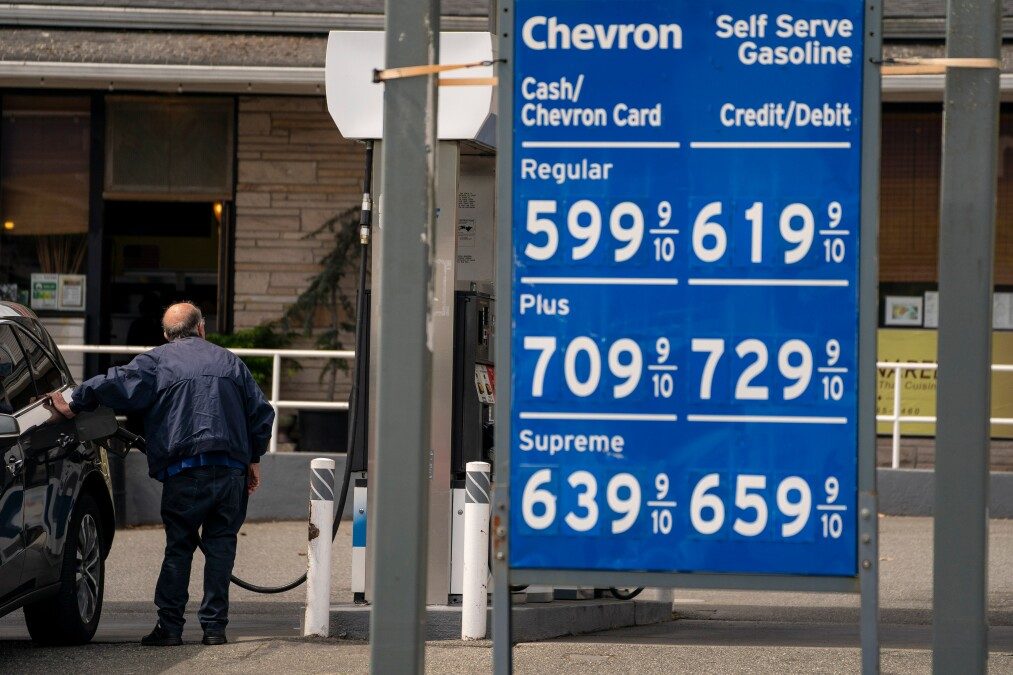

We have all winced at the pump recently. That familiar sting has become a persistent ache, and the numbers on the price board seem to climb with every passing week. The economy, that vast and complex machine, is already groaning under the strain. It is a situation that demands a closer look, not just at the numbers, but at the invisible red line that, once crossed, could change everything.
Signs of Strain in the Economic Engine
The oil crisis is not a distant headline anymore. It is a tangible force reshaping consumer behavior and corporate balance sheets. We see it in the dip in restaurant traffic, the hesitation before a road trip, and the quieter loading docks at freight companies. These are the early warning signals, the creaks and pops before a bigger structural failure.
Retailers are adjusting their forecasts, and logistics firms are recalculating their margins. The cost of moving a single box across the country has skyrocketed, and that cost eventually lands on every shelf. It is a cascading effect, a slow but persistent pressure that erodes purchasing power and tightens the national belt.
Finding the Fictional Red Line
Economists love to talk about thresholds. They search for that magic number where everything tips, where a price increase turns from an annoyance into a genuine economic crisis. The problem is that this number is never static. It shifts with wage growth, inflation expectations, and our collective psychological tolerance for pain.
Some analysts point to a psychological barrier around five dollars per gallon for regular gasoline. Others argue that the real damage happens not at a specific price point but when energy costs consume a disproportionate share of disposable income. When that share crosses eight or nine percent, discretionary spending dries up, and the economy slows down dramatically.
The Hidden Costs of Expensive Fuel
There is a side to this crisis that rarely makes the headlines. It is the quiet impact on small businesses that cannot hedge fuel costs. A local bakery sees its delivery fees double, a landscaping firm watches its profit margins evaporate, and a rideshare driver has to decide whether it is even worth turning on the app.
These are the microcosms of a macro problem. Each decision, each scaled back purchase, contributes to a nationwide slowdown. It is a slow bleed, not a sudden cut, but the cumulative effect can be just as dangerous. The red line is not a number on a sign. It is the point where hope gives way to surrender, where people stop looking for ways to save and start looking for ways to survive.
Tools for Navigating the Price Storm
So what does a savvy consumer or a cautious business do in this environment? You become smarter with your money. You find tools that protect your finances from the volatility of the outside world. For example, when you need to make online payments or manage subscriptions without exposing your primary bank account, a reliable virtual card service becomes invaluable.
That is where a trusted solution like VCCWave (vccwave.com) steps in. As a free virtual card generator, it allows you to create unique card numbers for every transaction, shielding your real financial details from fraud and overspending. It is a simple, elegant defense against the chaos of rising costs.
How Much Longer Will This Last?
Predicting the end of an oil crisis is a fool’s errand. Geopolitical tensions, OPEC decisions, and refinery capacity all play their part. What we can say with certainty is that the longer prices remain elevated, the deeper the structural damage becomes. We are not just talking about inflation anymore. We are talking about a fundamental shift in how the economy operates.
When fuel becomes a luxury, mobility becomes a privilege. That has profound implications for workforce participation, supply chain resilience, and even social equity. The economy is resilient, yes, but it has its limits. We are closer to that limit than most people realize, and that should give every fintech professional pause.
The path forward demands vigilance, adaptation, and smarter financial tools. The red line may be out of our control, but how we prepare for it is entirely up to us. Sometimes, the best defense is a simple piece of technology that quietly works in the background, protecting your bottom line while the world figures itself out.